A Bauhaus Lineage in Rye — Photographing the Beattie House
As an architectural photographer, I research every job before I quote it. Floor plans if I can find them, site topography, architectural history, prior photography of the space. By the time I pack my equipment, I want to understand what I'm walking into — not just logistically, but architecturally. What does this building mean? What was the intention behind it? What has it become?
When Westchester Magazine approached me to photograph the Beattie House in Rye, the research confirmed what I already suspected: this one would resonate differently.
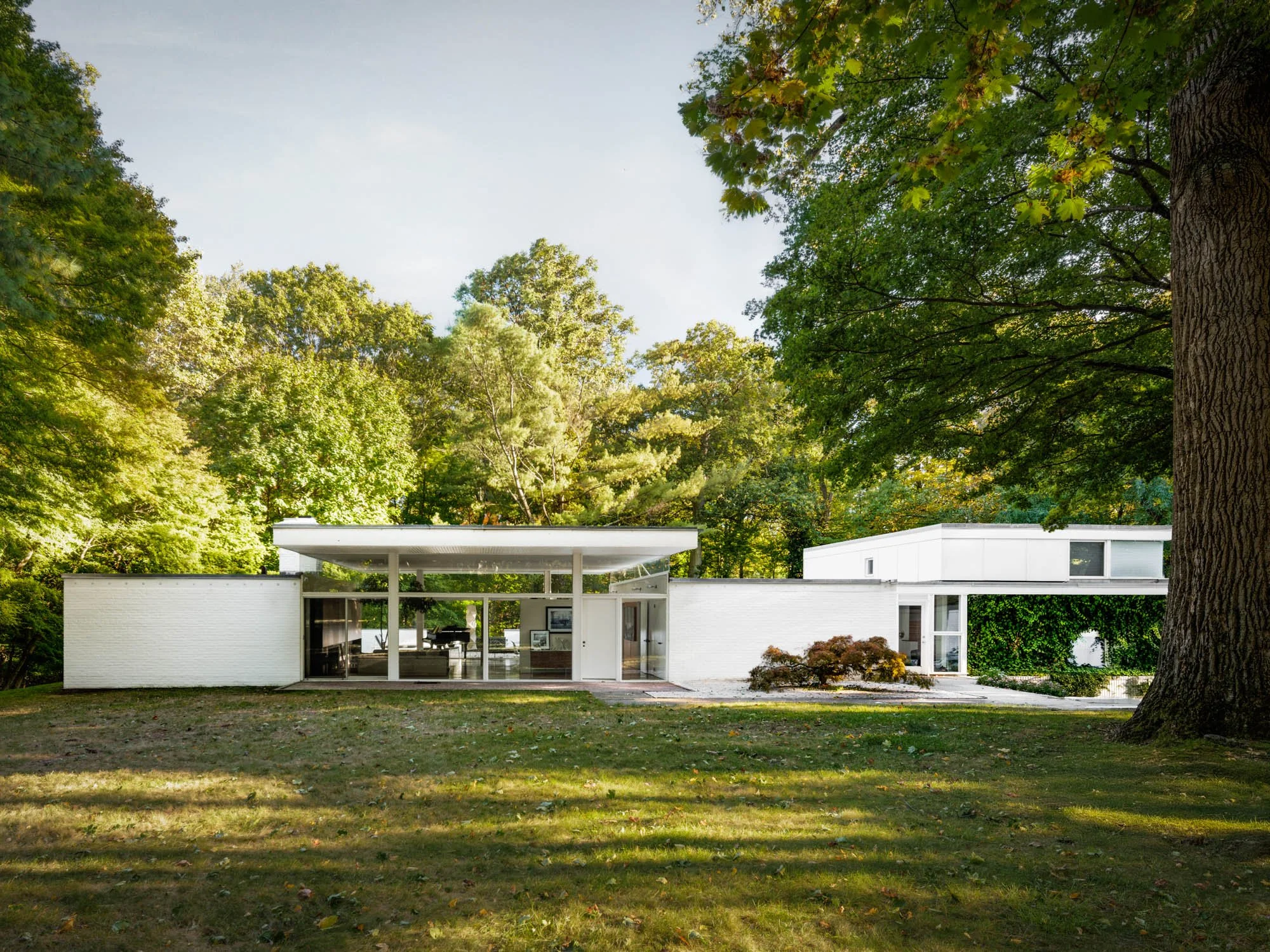
The house was designed in 1958 by Ulrich Franzen. German-born, like me. He came to the United States in 1936, studied at Harvard under Walter Gropius alongside a generation that included I.M. Pei and Philip Johnson, and built some of the clearest expressions of the Bauhaus tradition on American soil. I grew up in Germany, where that visual language isn't a style you discover — it's part of how you learn to see. The geometry, the discipline, the insistence that form follow purpose. Last year I built an exhibition around the Bauhaus. Photographing a house that traces a direct line to Gropius felt less like an assignment and more like a continuation.
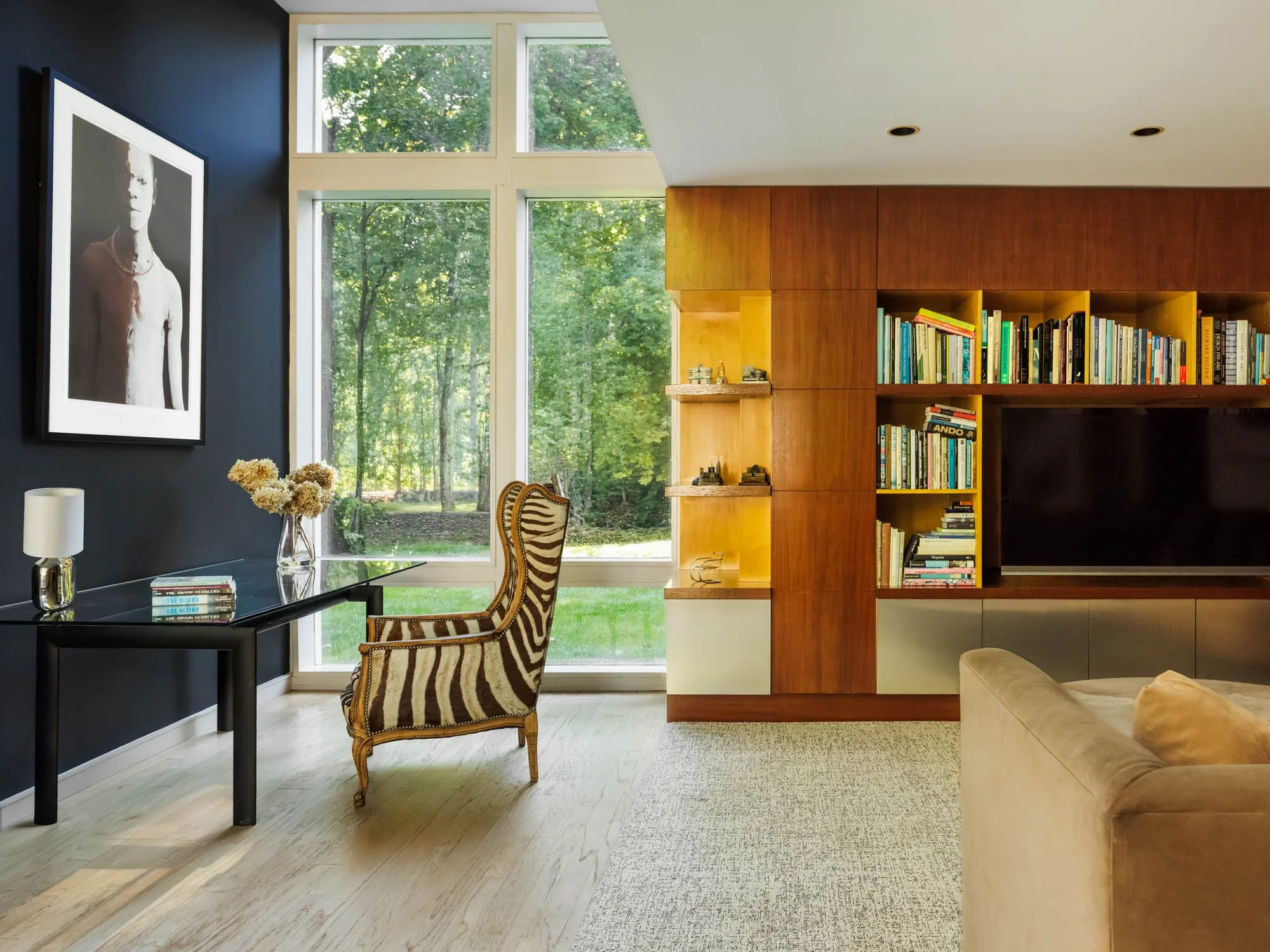
The house announces itself. White and angular on a traditional tree-lined block in Rye, adjacent to the Edith G. Read Wildlife Sanctuary, it reads as an object placed in the landscape rather than grown from it. Shortly after completion it was featured in Life magazine as a paragon of contemporary design and selected as one of Architectural Record's first Record Houses. It earned both distinctions on its own terms.
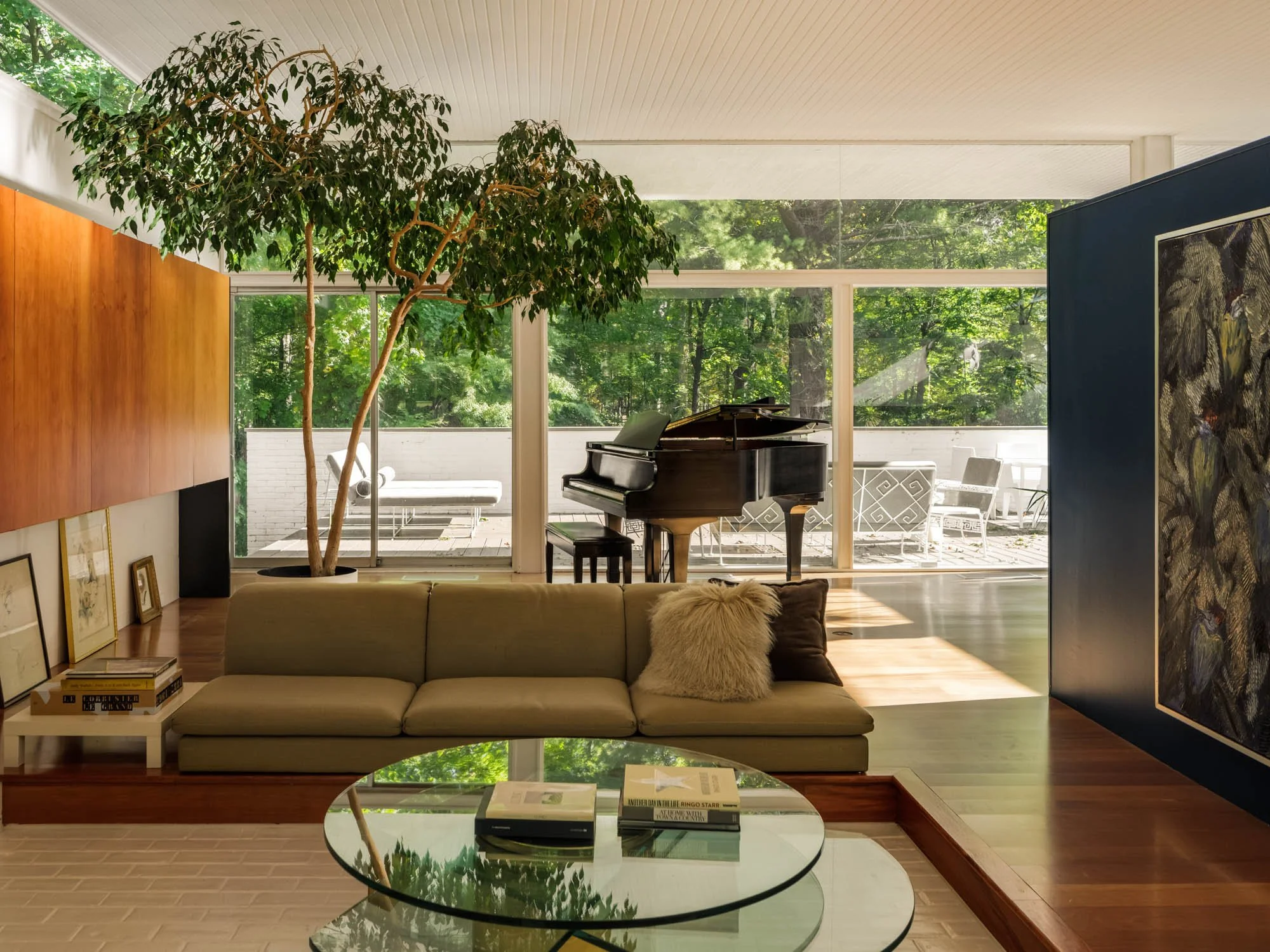
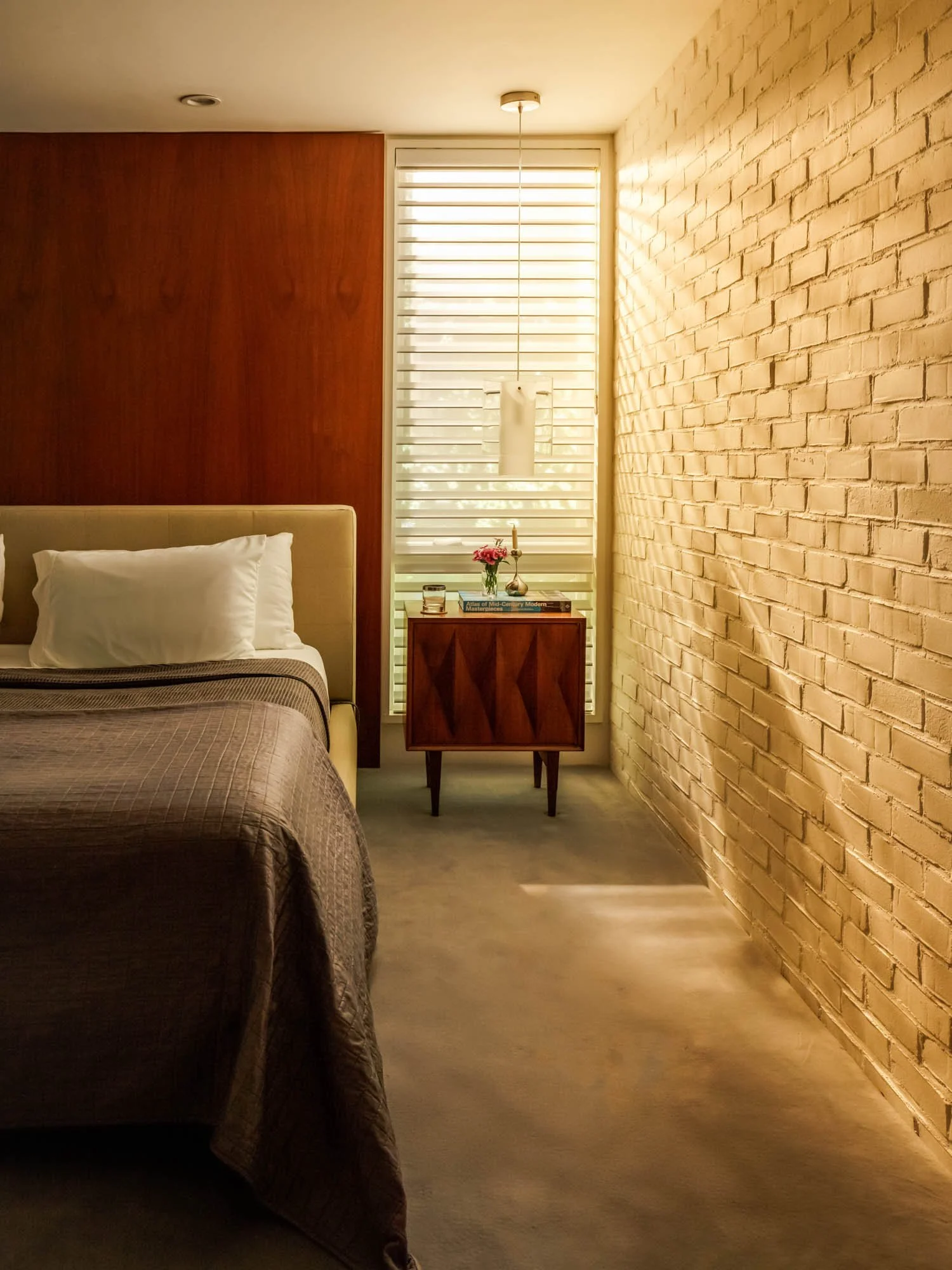
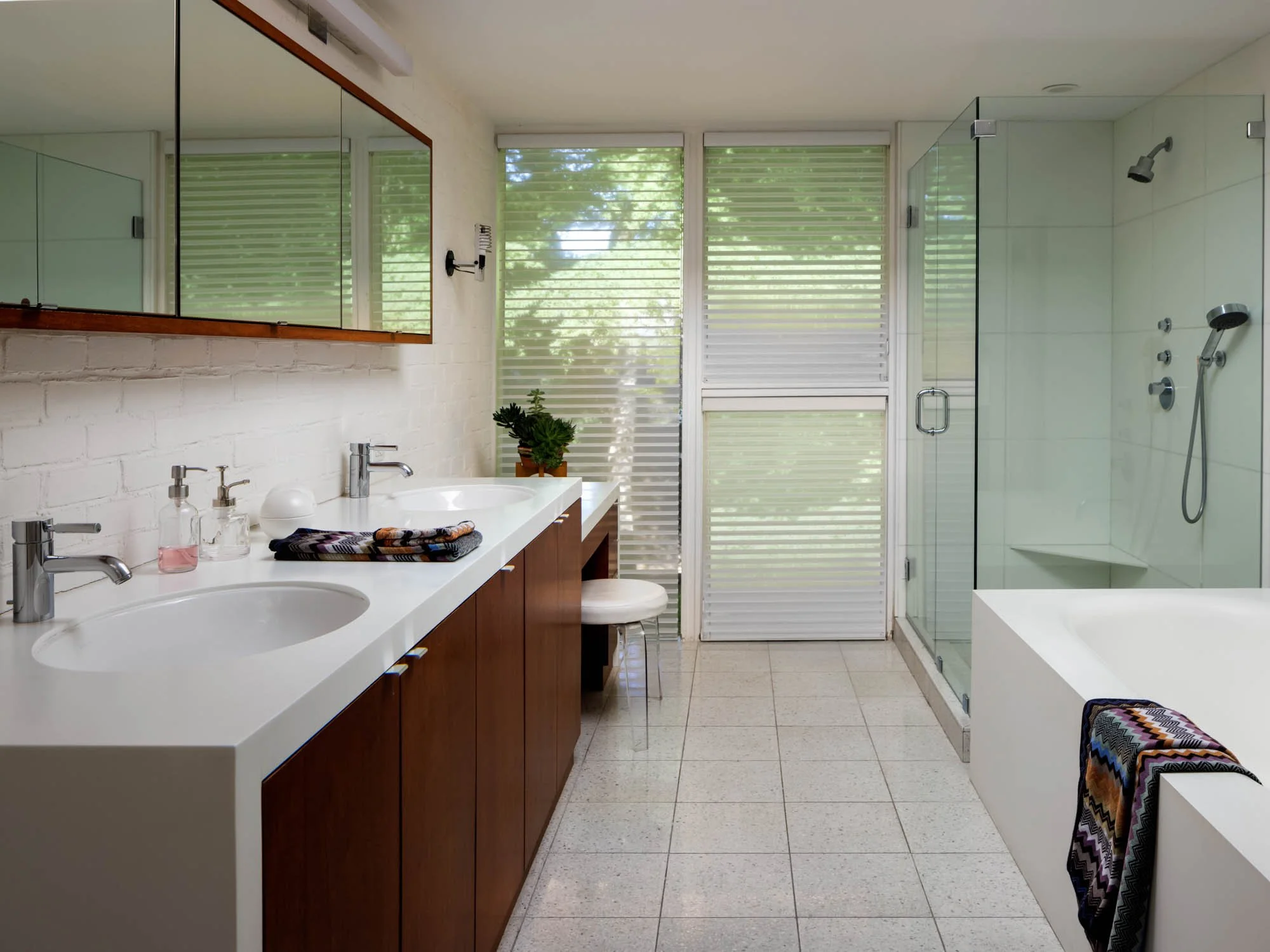
What adds another layer is who lives there now. David Gross, a founding partner of New York-based GF55, has stewarded the Beattie House for more than three decades. His 1996 renovation doubled the square footage — a new glass cube, a brick structure that responds to the slope of the property — while stripping paint that previous owners had applied to the original exposed brick. His approach has been that of an architect in genuine dialogue with another architect's work. That dialogue earned him an AIA Award of Merit in 1998, the same honor Franzen received for the original design forty years earlier.
The feature ran in Westchester Magazine in March. These are my photographs.